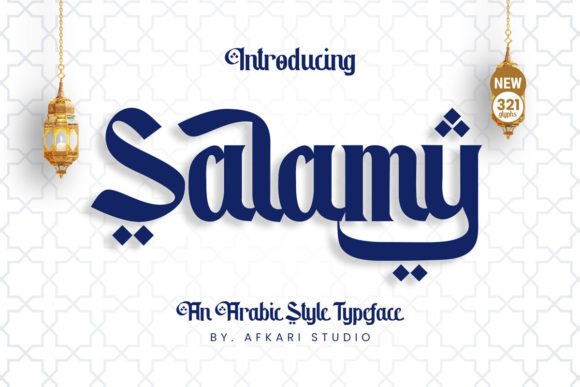
Salamy Font for Creative Design
There I was, late on a Thursday evening, working on a candle label for my latest batch of soy candles. The client wanted something elegant, something that felt like it belonged in a boutique or a high-end gift shop. I reached for Salamy, and instantly, the design came to life. It wasn’t just a font—it was a story waiting to be told.
Salamy for Elegant Candle Labels and Boutique Packaging
Salamy is a display font that brings the soul of Arabic calligraphy into modern design. Its graceful curves and intricate details make it perfect for handmade labels, especially when you want to evoke a sense of luxury and tradition. I tested it on a candle label with a simple “Lavender & Sage” text, and the result was stunning. The font added a soft, artistic touch that elevated the whole product.
When used on boutique packaging, Salamy adds a layer of sophistication. I paired it with a clean sans serif for the product description, and the contrast made the design feel balanced yet bold. It’s ideal for small businesses looking to stand out with a unique visual identity.
Salamy for Wedding Invitations and Seasonal Stationery
I recently designed a set of wedding invitations for a friend, and Salamy was the perfect choice. Its flowing lines and ornate details gave the invitations a timeless feel, while still being legible and professional. I used it for the couple’s names and the event details, and it brought a level of elegance that felt authentic and refined.
The font also works well for seasonal stationery, like holiday cards or birthday invitations. I tried it on a farmhouse-style sign for a Christmas card, and it looked like it had been hand-painted. It’s versatile enough to fit both traditional and modern aesthetics, making it a great addition to any designer’s toolkit.
Salamy for Digital Printables and Printable Wall Art
If you’re creating digital printables, Salamy is a must-have. I used it for a set of printable wall art featuring quotes and motivational phrases. The font’s decorative nature made the designs feel more personal and artistic. It’s especially effective when used in larger sizes, where its details can shine.
For printable wall art, pairing Salamy with a simpler font helps maintain readability without sacrificing style. I found that using it for titles and headings, while keeping body text in a clean serif or sans serif, created a visually appealing hierarchy that worked well for both digital and physical prints.
Salamy for Tote Bags, Shirts, and Merchandise
Testing Salamy on a tote bag design was a revelation. I used it for a custom phrase, “Find Your Light,” and it looked amazing. The font’s fluidity gave the design a handcrafted feel, which is exactly what I was going for. It’s perfect for small-batch merchandise, especially when you want to add a personal touch to your products.
On shirts and other apparel, Salamy can be used as a logo or a statement piece. I recommend using it in larger sizes and avoiding very small text, as the intricate details might not translate well to fabric. But when done right, it adds a unique flair that makes your designs stand out.
Salamy for Product Tags and Shop Branding
Shop branding is all about consistency and recognition, and Salamy can help create a cohesive look. I used it for product tags in a small online shop, and it immediately gave the brand a more polished appearance. The font’s beauty and character made each tag feel like a work of art, which is exactly what I wanted for a handmade business.
It’s also great for signage and store displays. Whether you’re designing a banner for a pop-up shop or a sign for your storefront, Salamy adds a touch of class that speaks to customers. Just be mindful of how it scales—when used too small, the details can get lost, so it’s best reserved for larger, more prominent placements.